



Polyurethane vs Rubber Bushings: An Honest Comparison for Your Car
Quick answer: Polyurethane bushings last 3–5 times longer than rubber ones and hold up far better against chemicals, oil, and sharp temperature swings. Rubber bushings are softer and cheaper, but wear out faster. For most real-world driving conditions, polyurethane pays off in the long run — fewer replacements mean lower overall cost.
The "polyurethane vs rubber" debate is about as old as car suspensions themselves in automotive communities. But unlike most online debates, this one actually has a clear answer.
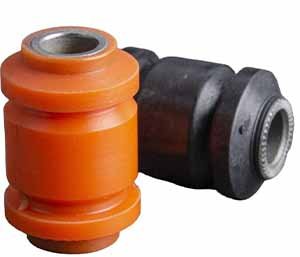
What Is a Bushing, and Why Material Matters So Much
A bushing (silent block) is a flexible joint: two metal sleeves with an elastic layer between them. Every bushing in a car's suspension does the same job — damping impacts, vibration, and noise between the suspension components and the body while driving. But the part's service life and behavior are determined entirely by the material of that elastic layer.
Polyurethane is a synthetic elastomer with higher wear resistance and strength. Rubber is an organic elastomer with greater elasticity and flexibility, but lower resistance to outside factors. That difference in the nature of the materials is what drives everything else.
Polyurethane vs Rubber Bushings: Comparison Table
| Characteristic | Rubber Bushings | Polyurethane Bushings |
|---|---|---|
| Service life | 40,000–80,000 km | 100,000–300,000 km |
| Resistance to chemicals and oils | Low | High |
| Temperature resistance | Limited | −40°C to +70°C |
| Joint stiffness | Soft | Slightly higher |
| Vibration isolation | High | High |
| Cost | Cheaper | From 350 UAH/pc (PolyPro) |
| Long-term reliability | Medium | High |
Advantages of Polyurethane Bushings
Polyurethane barely reacts to aggressive factors such as oil, acids, and road chemicals. Unlike rubber, it doesn't crack in frost or "flow" under the high temperatures found in an engine bay. Sharp swings from −20°C to +5°C within a single day — a normal Ukrainian winter — aren't a problem for polyurethane. That chemical and temperature resistance is exactly what makes polyurethane parts so durable.
Higher wear resistance translates into concrete numbers: where a rubber suspension component lasts 50,000–70,000 km, a polyurethane one lasts 150,000–200,000 km. For a car owner, that means fewer trips to the shop and a real opportunity to save on suspension maintenance over the long run.
Another advantage is driving precision. Polyurethane's slightly higher stiffness gives the driver a clearer feel of the road: the car responds more precisely to steering input and "wanders" less in corners. For a driver who values control, that's a noticeable difference compared to rubber.
PolyPro polyurethane bushings are made from cast polyurethane with a stable structure and high-quality components — they don't require any special care for their entire service life.
Advantages of Rubber Bushings
Rubber holds its ground in the auto industry just as confidently as gasoline does — even though alternatives have long existed. And there are specific reasons for that.
A rubber bushing keeps the suspension supple: rubber's elasticity is higher than polyurethane's, and it absorbs small vibrations from road irregularities more effectively. For a driver who values city-driving comfort over sharp handling, rubber parts give a softer ride. But rubber parts are only cheaper on paper — once you factor in how often they need replacing over the car's lifetime, that advantage disappears.
Cheap rubber components also degrade faster: exposed to chemicals and temperature swings, rubber loses its elasticity and hardens after just 40,000–50,000 km. Cracking, stiffening, and play in suspension joints are the typical result — all of which hurts handling and driving safety.
One real argument in rubber's favor is that it's used as original equipment on every car, which gives predictable suspension behavior on first installation. But from the first replacement onward, the "rubber or polyurethane" question is wide open.
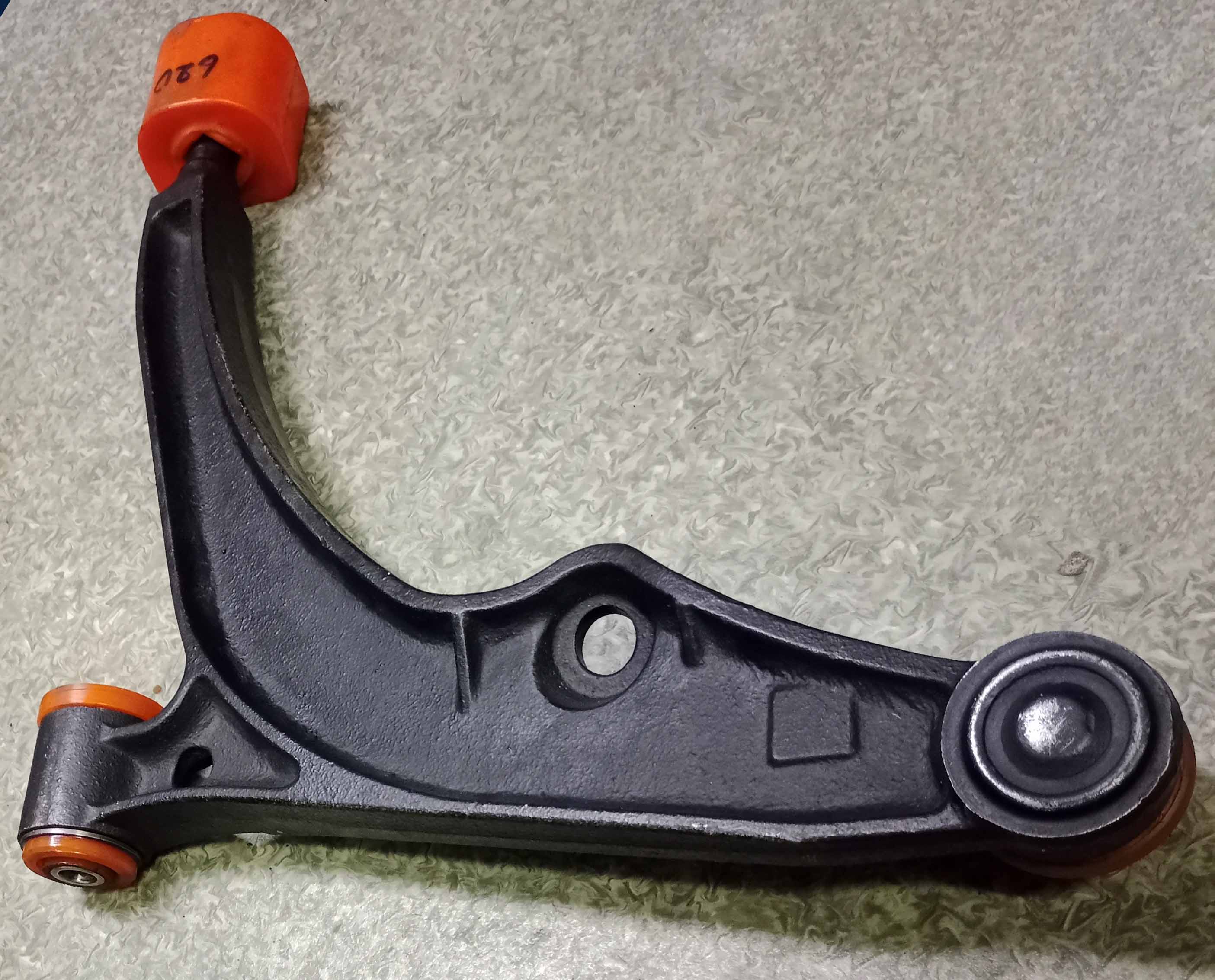
Why Polyurethane Bushings Are the Better Choice for Most Conditions
To put it plainly: for most cars and real-world driving conditions, polyurethane wins. Not because rubber is bad, but because polyurethane holds up better exactly where rubber degrades fastest.
A car's suspension isn't the place to cut corners on material quality. Worn suspension components hurt handling, wear tires unevenly, and reduce road safety. Replacing any bushings once with quality polyurethane parts — for good — is a smarter strategy than getting one season out of cheap alternatives and heading back to the shop.
PolyPro polyurethane parts aren't a "sport" option — they're a full replacement for original parts with higher reliability in real-world conditions. More and more drivers are choosing polyurethane even for ordinary city cars, precisely because of its service life and predictable suspension behavior.
Although polyurethane parts cost more upfront than rubber equivalents, the real cost of maintaining a car's suspension over 200,000 km is lower. Over that distance, you'll need one set of polyurethane bushings — versus two or three sets of rubber ones.
Where to Buy Polyurethane Bushings
Find PolyPro polyurethane bushings matched to your car's make, model, and year in the parts catalog at kapot.in.ua.
Price — from 350 UAH per piece. Warranty — 12 months, no mileage limit. Delivery across Ukraine.
Questions about choosing the right parts: (050) 21-35-163 or (067) 21-35-163. Or reach us on Viber.
Get a Consultation on Choosing the Right Parts:
VIBER

TELEGRAM