



What Is Polyurethane Engine Mount and Strut Mount Reconstruction?
Every car owner knows that even the most reliable parts eventually need repair or replacement. When you're faced with restoring your car's suspension, you may discover an effective and cost-efficient method: reconstructing parts with polyurethane. This modern approach doesn't just give your worn parts a second life — it significantly improves their performance, all at a reasonable price. Polyurethane reconstruction of auto parts is an innovative way to extend the service life of automotive components, and it deserves the attention of anyone looking to optimize costs and boost the reliability of their vehicle. Choosing this restoration method can save you significant money. So let's look at the benefits of polyurethane reconstruction and find out which auto components respond best to this type of repair, so you can make an informed decision about caring for your car.
What Is Restoration?

In the automotive service industry, the term reconstruction is often used to describe the process of restoring vehicle parts and assemblies to a condition as close as possible to their original state — or even better. Polyurethane, thanks to its properties, is one of the materials perfectly suited for this kind of work.
Using polyurethane for auto parts reconstruction offers a number of advantages. This material is known for its high wear resistance, elasticity, and ability to withstand significant mechanical loads. Polyurethane is also resistant to oils, gasoline, and other chemicals that often cause traditional rubber components to wear out quickly. Polyurethane reconstruction can be applied to a wide range of parts, including silent blocks, shock absorber components, bushings, engine mounts, body mounts, and other parts subject to intense wear.
Why Choose Polyurethane Restoration for Your Engine Mount?
Choosing polyurethane reconstruction for your auto parts is the optimal solution for anyone who wants high-quality, long-lasting vehicle components. Thanks to its unique properties, polyurethane delivers excellent wear resistance and elasticity, which is critical for suspension elements and other moving parts of the car. Reconstruction with this material can significantly extend the service life of parts, which ultimately makes it a cost-effective choice.

Which Auto Parts Are Worth Reconstructing?
Polyurethane reconstruction is an effective way to extend the service life of components that have worn out or become damaged. Polyurethane, thanks to its high performance characteristics, can restore a part's properties, ensuring strength and durability. Here are some of the parts that are commonly reconstructed:
Suspension — sway bar bushings, silent blocks, shock absorber inserts.
Steering — tie rod mounting silent blocks, steering rack bushings.
Transmission — driveshaft support mounts, gearbox and differential mounts.
Boots (dust covers),
Engine — engine mounts and mounting silent blocks.
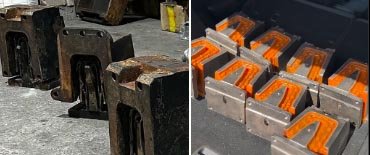
We're also frequently contacted not only for reconstructing parts on passenger cars, but also for restoring components for heavy equipment, trucks, and agricultural machinery. This highlights the versatility and practicality of our restoration expertise and capabilities. We're proud to take on complex projects, delivering high-quality repair and restoration for a wide range of vehicles. Our workshop is fully equipped to work with large and heavy machinery, allowing us to restore parts that significantly affect the efficiency and safety of their operation.
Using polyurethane for reconstruction doesn't just restore a part's functionality — it can also improve its performance compared to the original component. This is especially valuable for vehicles operating under heavy loads or on rough roads, where wear resistance is critical.

When choosing parts for reconstruction, it's important to consider the economic value of the work. For example, reconstruction can be more cost-effective for rare or high-value vehicles, where replacing original parts is significantly more expensive. It's also worth considering the option of upgrading parts, which can improve the car's overall performance. Often the real question comes down to whether replacement rubber parts are available at all — we're frequently contacted about suspension components that haven't been manufactured for years and are impossible to find.
Steps in the Polyurethane Reconstruction Process
STEP 1. You send us the part that needs a "new life," or we source the necessary bracket ourselves from a salvage yard or buy an inexpensive sample of a new part.
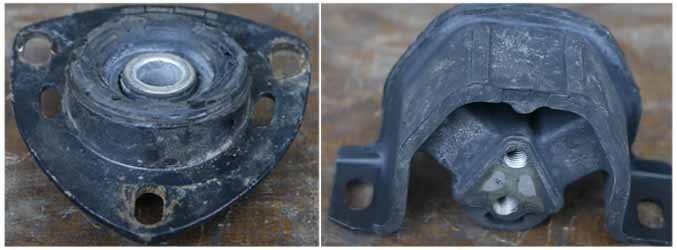
STEP 2. We remove the remnants of old rubber or other materials used in the sample we received.
STEP 3. We thoroughly clean and sandblast the blank.
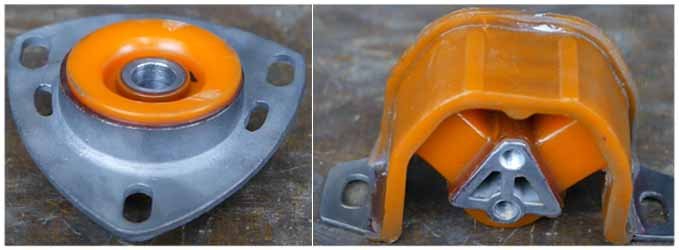
STEP 4. We apply primer (adhesive) and cast the polyurethane.
STEP 5. We send the part to quality control to verify the casting was done correctly.
STEP 6. We ship the finished part back to you.
This way, you can get parts that are no longer manufactured or are very difficult to find for installation.
Get a consultation on choosing the right parts:
VIBER

TELEGRAM

Frequently Asked Questions
Q: What is auto parts reconstruction?
A: Reconstruction is the process of restoring or modifying part of a component with polyurethane to restore or improve its functional properties, or to bring it in line with new requirements.
Q: How long does reconstruction take?
A: Reconstruction time depends on several factors, such as the part's condition, the amount of work involved, and others. Reconstruction typically takes about 10-15 business days.
Q: Which parts can be restored?
A: Reconstruction can cover a variety of parts and components — most often engine mounts and subframe silent blocks, but we also frequently restore parts for large, heavy-duty equipment.
Q: Can you restore parts for agricultural machinery?
A: Yes, we can restore parts for agricultural machinery.
Q: Can you restore parts for heavy equipment?
Yes, we can restore parts for heavy equipment.
Q: What are the requirements for reconstruction?
A: Usually we need the part itself, so we can use it as a reference to make a mold for restoration.
Q: What processes are involved in reconstructing a part?
A: The process includes selecting the part, determining the customer's requirements, restoration using high-quality materials and technology, and quality control of the finished work.
Q: How does reconstruction affect a part's functional properties?
A: Reconstruction affects a part's functional properties by changing its construction and materials, helping achieve high quality and compliance with requirements.
