



What Is a Car Differential?
Every car enthusiast knows that feeling when a vehicle seems to sense exactly when to add power or slow down smoothly - it's something special. But not everyone stops to think about the whole system behind it, and one of its most important parts is the differential. In this article, we'll uncover everything about the car differential: from where it sits in the vehicle and how many a car can have, to how to spot wear and what's actually going on inside the housing - including the part some parts catalogs label a "reducer."
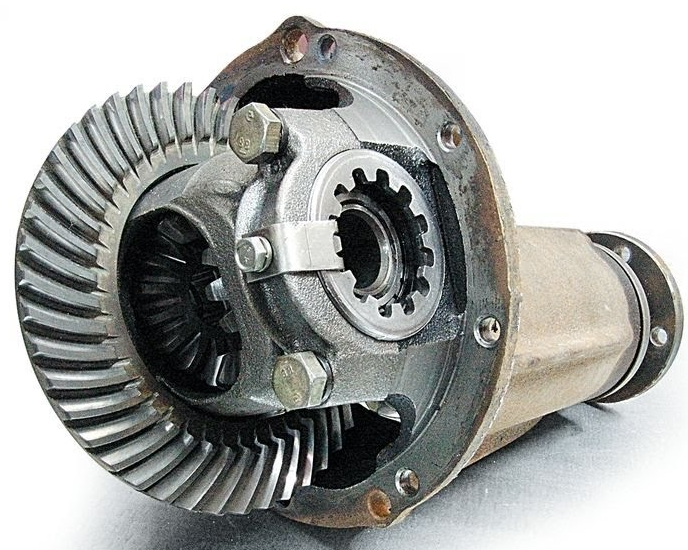
What Is a Car Differential For?
At the heart of every car is a mechanism that makes its movement and efficiency on the road possible. The differential plays a key role in transferring torque from the engine to the wheels, letting the car reach the speed it needs while keeping it stable across different road conditions. Its main function is to change the direction and magnitude of torque, which makes it an irreplaceable part of the drivetrain.
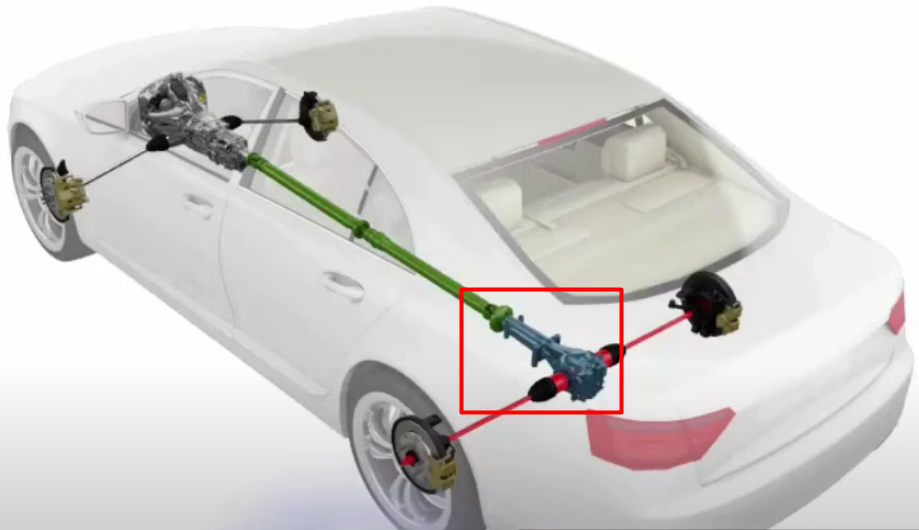
Without this component, it would be impossible to drive a car efficiently, especially when climbing grades or driving in tough road conditions. So the differential doesn't just improve a car's handling and dynamics - it also helps save fuel, which matters even more in today's world, where efficiency and environmental impact are under close scrutiny.
Where Is the Differential Located in a Car?
Where the differential sits in a car depends on its drivetrain type and layout. In most cases, you'll find this important drivetrain component in one of these places:
In the rear axle - on rear-wheel-drive cars, the differential is usually housed in the rear axle assembly, transferring torque from the driveshaft to the wheels.
In the front axle - on front-wheel-drive cars, the differential is built into the transmission and splits power between the front wheels.
In the transfer case - on all-wheel-drive cars, the differential sits in the transfer case, splitting power between the front and rear axles.
Knowing this helps drivers better understand how their car is built and how to keep it properly maintained.
How Many Differentials Does a Car Have?
The number of differentials in a car can vary depending on its layout and drivetrain type. Traditional rear-wheel-drive cars usually have one main differential, located in the rear axle. In front-wheel-drive cars, however, the differential is built into the transmission, handling torque distribution between the wheels. In all-wheel-drive models, the number of differentials rises to two or three, including a center differential or an inter-axle unit that splits power between the front and rear axles. Experts recommend keeping an eye on differential condition, especially on all-wheel-drive cars, since wear or a fault here can seriously affect handling and driving safety.
Final Drive vs. Differential Gear: What's Inside the Housing?
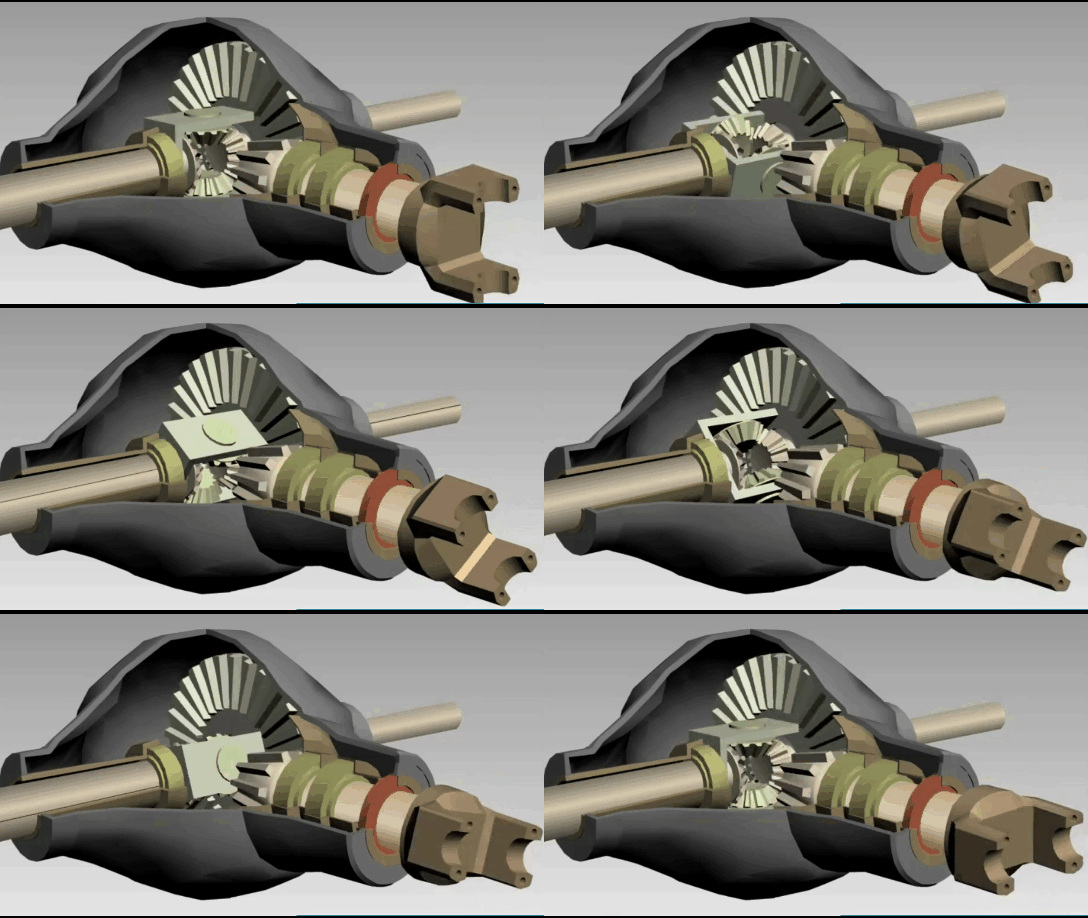
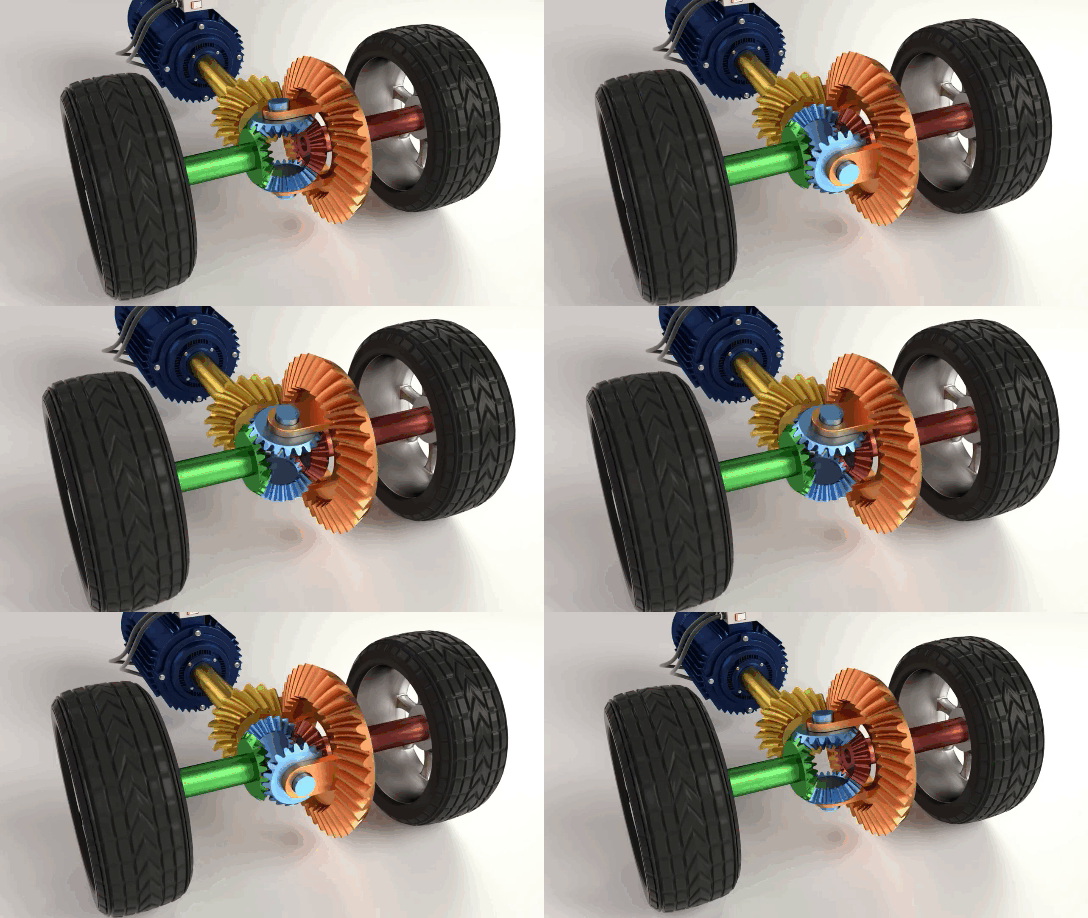
To understand the difference, it helps to know that a car's differential housing actually contains two distinct mechanisms with two distinct jobs. The final drive - what some parts suppliers, including ours, label a "reducer" - is the gear set that changes the torque and the direction it's transmitted from the engine to the drive wheels. The differential gear set, on the other hand, lets the drive wheels spin at different speeds, which is exactly what's needed when the car goes around a corner. That's the key distinction: it lets the car adapt to different road conditions and makes driving more comfortable.
Let's look at the technical side. The final drive (reducer) usually consists of a gear pair or a worm gear that changes the angle and speed of the shaft's rotation. The differential gear set, meanwhile, is made up of a set of gears that distribute power between the wheels, letting them spin at different speeds. This matters most in corners, where the inside wheel needs to turn slower than the outside wheel.
Here's a comparison table to make it clearer:
Parameter.... | Final Drive (Reducer).... | Differential Gear Set |
Main function.... | Changes torque and the direction it's transmitted.... | Lets the wheels spin at different speeds |
Design.... | Gear pair or worm gear.... | Set of gears that distribute power |
Example application.... | Transferring torque from the engine to the wheels.... | Letting the wheels spin at different speeds in a corner |
So while the final drive and the differential gear set do different jobs, they're both key parts of a car's torque-transfer system, housed together in what's commonly called the differential. Together, they make sure the car handles efficiently and safely.
How Long Does a Differential Last?
A differential's service life in a car can vary a lot depending on many factors, including driving conditions, maintenance quality, and vehicle type. With proper care and regular fluid changes - a key part of keeping the differential in good shape - its service life can reach 200,000 km (about 124,000 miles) or more. However, under intensive use or if maintenance recommendations are ignored, that figure can drop significantly.
One of the most important factors affecting differential longevity is the quality of the fluid used. The wrong or low-quality fluid can accelerate parts wear, increase friction, and, as a result, cause overheating. This doesn't just shorten the differential's service life - it also raises the risk of serious failures. That's why fluid should be chosen based on the vehicle manufacturer's recommendations and the differential's specifications.
Driving style also affects how long the differential lasts. Aggressive driving with frequent hard starts and stops puts extra load on the differential, speeding up its wear. A calmer driving style, with smooth acceleration and braking, on the other hand, helps extend the life of all drivetrain components, including the differential. So it's important not only to service the car regularly, but also to follow good driving practices.
Get a Consultation on Choosing Differential Mounts:
VIBER

TELEGRAM

Signs of a Failing Differential
You can usually spot a differential nearing the end of its service life through a set of characteristic signs. Noises, clunks, and vibrations while driving are the first signals worth paying attention to. These symptoms point to wear in the differential's components, which can lead to a breakdown. It's also worth watching for worse acceleration and higher fuel consumption, which can signal the differential is losing efficiency.
For a more precise diagnosis, it's a good idea to compare the differential's current operating parameters against the standard values. Below is a comparison table for typical differential parameters that can point to wear.
Parameter.... | Normal.... | Signs of Wear |
Noise level (dB).... | Up to 70.... | Above 70 |
Vibration (mm/s).... | Up to 3.0.... | Above 3.0 |
Operating temperature (°C).... | Up to 90.... | Above 100 |
Exceeding the standard values on any of these parameters can point to serious problems with the differential and the need for diagnosis or repair. It's important not to ignore these signals, to avoid more serious breakdowns down the road.
How Is the Differential Mounted?
How a differential is mounted in a car depends on its type and the vehicle's layout. On rear-wheel-drive cars, the differential is usually mounted on the rear axle, attached to the axle housing through differential mounts or bushings (what our own catalog labels "reducer" bushings). On front-wheel-drive cars, the differential is built into the transmission.
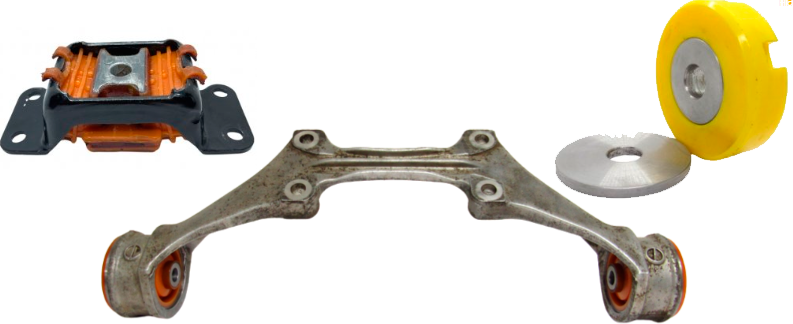
Differential mounts and differential mounting bushings are usually made from rubber or polyurethane, each with its own advantages. Rubber parts are traditionally used for their ability to effectively dampen vibration and provide good cushioning. Polyurethane components, meanwhile, are gaining popularity for their higher strength and resistance to aging, chemicals, and temperature swings - and, when the material is properly processed by the manufacturer, they also dampen vibration excellently. These mounts work on the same principle as the silent block bushings used throughout a car's suspension - see our guide on what a silent block is for more on how rubber and polyurethane bushings compare.
It's important to make sure all mounting elements are installed and tightened correctly, to avoid vibration and noise while driving. Using the right gaskets and sealants helps prevent transmission fluid leaks, which is critical for the longevity of the differential and the whole drivetrain.
Let's look at some examples of differential mounting on different types of cars. The table below shows data for several models, illustrating the range of approaches to differential mounting depending on a car's layout and drivetrain. This highlights why a model-specific approach matters when repairing and servicing the drivetrain.
Car Model.... | Drivetrain Type.... | Differential Mounting Method |
BMW X5.... | All-wheel drive.... | Bolts with gaskets |
Toyota Corolla.... | Front-wheel drive.... | Built into the transmission |
Mercedes-Benz C-Class.... | Rear-wheel drive.... | Mounted on the axle housing |
What Happens If the Differential Mount Fails or Uses Low-Quality Parts?
If the differential is poorly mounted, or mounted with low-quality hardware, it can lead to a number of serious problems with the car. First, an unreliable differential mount can cause increased vibration and noise while driving, which not only reduces passenger comfort but also signals a safety risk. Second, it can cause improper torque delivery to the wheels, which hurts the car's handling and stability. On top of that, an insufficiently secure differential mount risks the unit shifting - or even coming loose from its mounting point - under heavy load, which could lead to a dangerous situation on the road. Using low-quality mounting hardware also wears out faster, leading to frequent repairs and, as a result, extra costs. That's why it's critical to ensure the differential is mounted securely and reliably, using high-quality parts.
