



What Is an Engine Mount and Why Do You Need One?
According to recent studies, most car problems are related to faults in the suspension system and the engine's mounting elements. The engine mount, which plays a key role in dampening vibration and stabilizing the motor, is one of these critically important components. In this article, we'll cover the main aspects of engine mounts: how many a car has and their internal structure, how they work and their main functions, signs of failure, and answers to questions about when replacement is needed and possible issues after the procedure. Our goal is to give you all the information you need to keep your car in optimal condition and avoid unexpected breakdowns.
What Is an Engine Mount?
An engine mount is a component of a car's engine mounting system that plays an important role in reducing the vibration and noise generated by the engine while it runs. It's typically made from a durable but flexible material such as rubber or polyurethane, sometimes combined with metal elements for extra strength and durability. Engine mounts work alongside other mounting elements — such as bushings and body mounts — to keep the whole vehicle stable and properly positioned.
Types of Engine Mounts
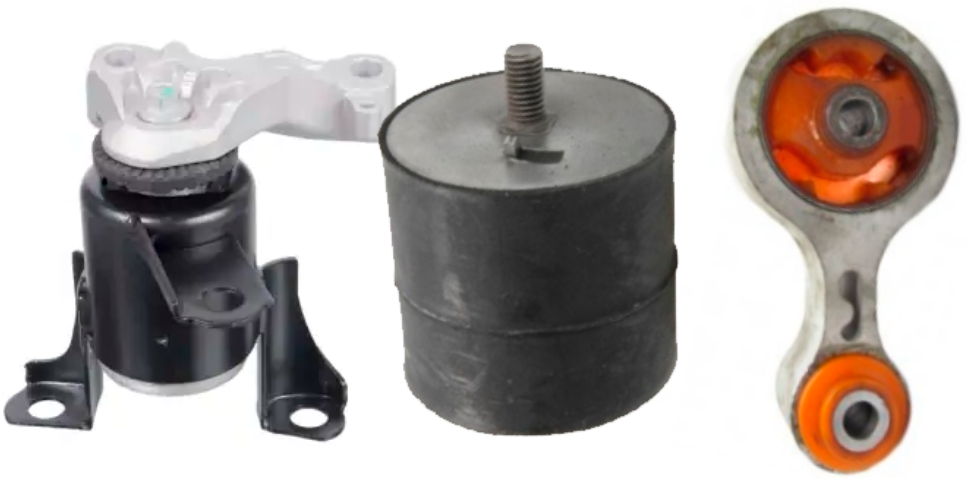
Engine mounts come in several types, each with its own characteristics suited to particular driving conditions. The main types of engine mounts include:
Rubber mounts: The most traditional and widespread type, using rubber's elastic properties to dampen vibration. Rubber mounts absorb vibration and noise effectively but can wear out faster under high temperatures or exposure to oil.
Polyurethane mounts: Made from polyurethane, a material with higher strength and better chemical resistance than rubber. Polyurethane mounts control vibration better under heavy loads, but their firmness can increase the amount of vibration transmitted to the body.
Hydraulic mounts: Equipped with an internal hydraulic system that dampens vibration more effectively through fluid movement inside the mount. These mounts provide a high level of damping and can adapt to different driving conditions, but they're more expensive and more complex to service.
Electronically controlled mounts: Use electronics to adjust the mount's stiffness and damping properties depending on road conditions and driving style. This is the most advanced type of mount, offering the best balance between comfort and stability, but it requires a complex control system and is costly to implement.
What Does an Engine Mount Do?
The main function of the engine mount is to minimize the vibration and noise generated by the engine while it runs. This is critical not only for driver and passenger comfort, but also for protecting other car components from excess strain. Without an effective engine mount, vibration could transfer to the body and chassis, accelerating their wear and shortening the car's service life.
In addition, the engine mount plays an important role in keeping the engine correctly positioned relative to the car's other units and assemblies. This ensures optimal torque transfer to the transmission and prevents potential damage from improper installation or engine misalignment — much like body (frame) mounts keep the body properly aligned on the chassis. In short, the engine mount is an important element in a vehicle's durability and reliability.
Get a Consultation on Choosing an Engine Mount:
VIBER

TELEGRAM

How Many Engine Mounts Does a Car Have?
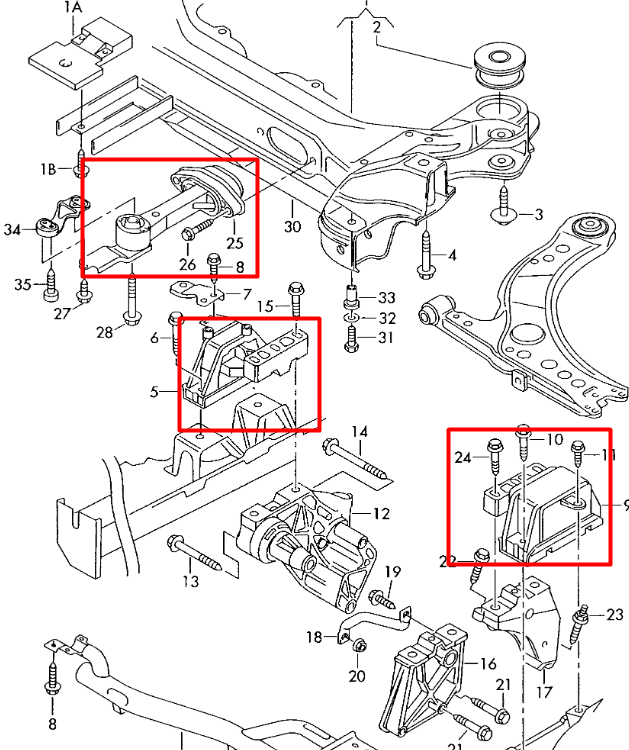
The number of engine mounts in a car can vary depending on the vehicle's model and design. Most cars use between two and four mounts to effectively distribute weight and minimize vibration. Experts point out that the correct condition and number of mounts are critical for keeping the engine stable and preventing damage. Special attention should be paid to checking the condition of the mounts regularly, since worn or damaged mounts can lead to serious engine problems and worse handling.
What's Inside an Engine Mount?
The internal structure of an engine mount is a complex system that effectively dampens the vibration and shocks generated while the engine runs. The main elements that make up an engine mount include:
Metal frame — provides strength and reliability to the whole structure.
Rubber or polyurethane elements — dampen vibration and shocks, protecting both the car body and the engine itself from damage.
Reinforcement — increases wear resistance and extends the mount's service life.
Hydraulic fluid (in hydraulic mounts) — improves vibration damping, making the engine's operation smoother and quieter.
Together, these components give the engine mount its high efficiency, allowing the car to run more stably and comfortably.
How Does an Engine Mount Work?
How well an engine mount performs directly affects the level of vibration and noise coming from a car's engine, and therefore driving comfort. The engine mount works by dampening and absorbing the vibration generated while the engine runs, preventing it from transferring to the car body. As an illustrative example, research conducted by one of the leading automotive component manufacturers showed that using high-quality engine mounts can reduce vibration levels by 40-50%. This confirms that the quality and condition of the engine mount play a key role in driver and passenger comfort, as well as in protecting car components from premature wear.
Signs of a Bad Engine Mount
A faulty engine mount can be identified by a number of characteristic signs. Increased vibration at idle or during acceleration is one of the clearest signals. This happens because a worn mount can no longer effectively dampen engine motion, so it gets transferred to the car body instead. It's also worth paying attention to noises and knocking sounds from the engine bay, especially noticeable when changing speed or braking sharply. These sounds can indicate that the engine is shifting and striking other components due to a mount failure.
A real-world example highlights the importance of timely diagnosis. At one repair shop, a car owner complained about an unusual noise during acceleration. After a thorough inspection, it turned out the cause was a worn engine mount, which not only caused the uncomfortable noise but also damaged nearby parts, multiplying the repair work. This case underscores how important it is not to ignore the first signs of a fault.
To confirm a diagnosis, it's best to consult a specialist who can run a full inspection of your engine mounts' condition. Modern equipment can accurately determine the degree of wear and whether replacement is needed. Ignoring the problem can lead to serious consequences, including damage to the engine mounting points and, as a result, costly repairs. Getting professional help in time can save you from many problems and keep your car running well.
Can You Replace Just One Engine Mount?
Replacing an engine mount is an important part of car maintenance that can raise plenty of questions for owners. In theory, you can replace just one mount if the others are in satisfactory condition. However, there are a few things to keep in mind:
Inspect the condition of all mounts — before replacing one, it's recommended to thoroughly check the condition of all mounts to make sure the remaining ones won't need replacing soon too.
Replacing a single mount can cause uneven load on the other mounts, accelerating their wear.
When replacing a mount, it's best to use one of the same type and manufacturer to ensure maximum compatibility and avoid potential handling issues.
Why Is There Vibration After Replacing an Engine Mount?
After replacing an engine mount, owners can sometimes run into an unpleasant issue — new vibration. This can be caused by a few different things, and it's important to be able to recognize and fix them.
Incorrect installation: If the engine mount is installed incorrectly, it can cause an imbalance and, as a result, vibration. Make sure all fasteners are properly tightened and the mount is compatible with your vehicle type.
Using a low-quality mount: Engine mounts vary in quality, and using a cheap or unsuitable one can lead to rapid wear and vibration. Choose trusted brands and models recommended for your vehicle.
Damage to other components: Vibration can be caused not only by the engine mount itself, but also by damage to related components, such as transmission mounts. Check the condition of all elements of the system.
Uneven load distribution: After replacing a single engine mount, the load on the engine's mounting system can become unevenly distributed, causing vibration. This is especially relevant if the other mounts are significantly worn and no longer provide adequate damping. It's recommended to check the condition of all engine mounts and, if necessary, replace them at the same time to ensure an even load distribution.
