



What Is a Sway Bar Link? Function, Location & Signs of Wear
Have you ever wondered what makes your ride stable and comfortable? The answer lies in a small but critical part — the sway bar link. This unsung hero of the automotive world doesn't just give you confidence through corners and stability on straight roads — it also looks after your comfort. In this article, we'll uncover everything about sway bar links: how they work, where to find them on your car, the signs they're wearing out, and why timely replacement matters. We'll also cover what happens if you ignore problems with this small but important part. Get ready to dive into the world of automotive stability, where every detail counts.
What Does a Sway Bar Link Do?
This suspension component is responsible for reducing body roll when cornering and driving over bumps. It shouldn't be confused with the sway bar itself, which the link connects to the control arm, or with the sway bar bushing, a separate part that cushions the sway bar's own mounting points to the vehicle's frame. For a broader look at how this type of part works across the whole suspension, see our guide on what a bushing is. The main functions of a sway bar link include:
Improving vehicle stability on the road, which matters most at high speeds and in corners.
Reducing tire wear through more even load distribution across the wheels, which extends tire life.
Improving handling and predictability, so the car tracks the intended course more precisely.
Increasing ride comfort by smoothing out oscillations and reducing body roll.
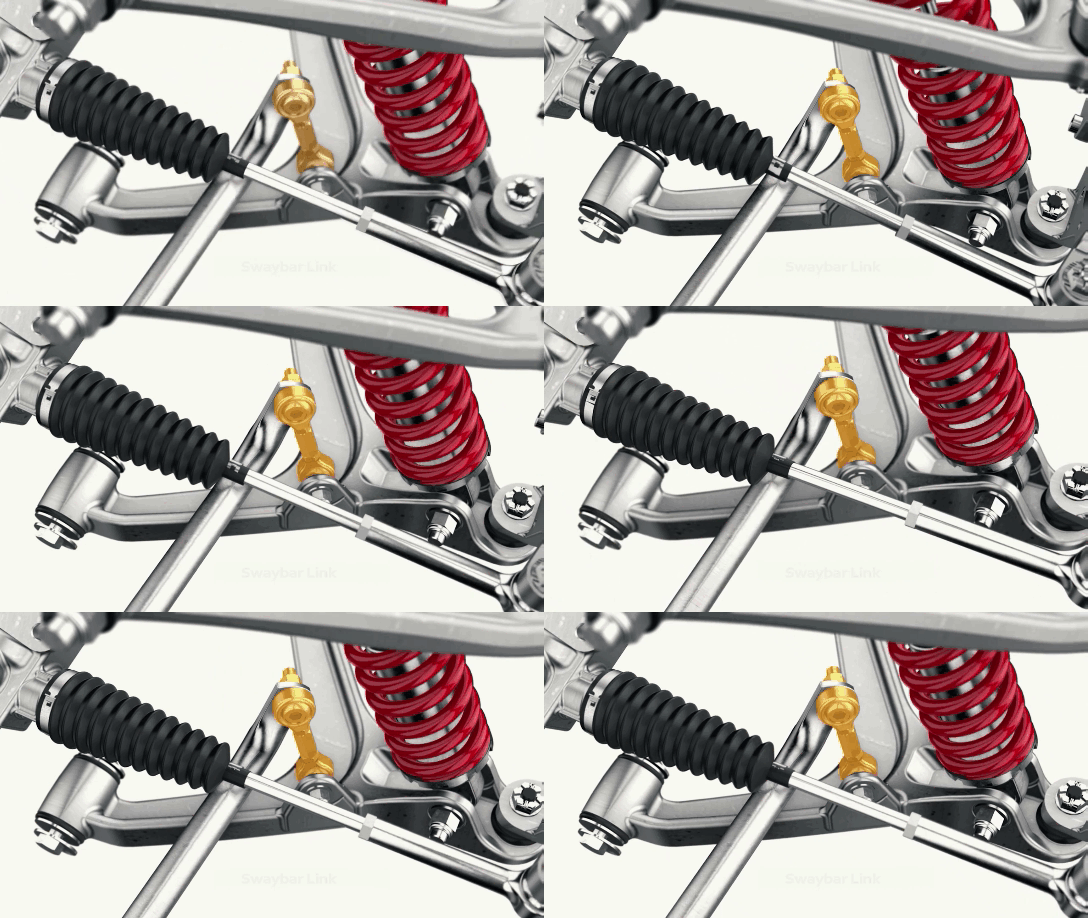
Where Is the Sway Bar Link Located?
The location of the sway bar link depends on the vehicle's design and can be installed on either the front or rear axle. These parts play a key role in providing proper handling and comfort, minimizing body roll in corners and over uneven road surfaces.
The placement of the sway bar link is decided by engineers during the vehicle's design stage and directly affects its handling and comfort.
What Are Sway Bar Link Bushings Made Of?
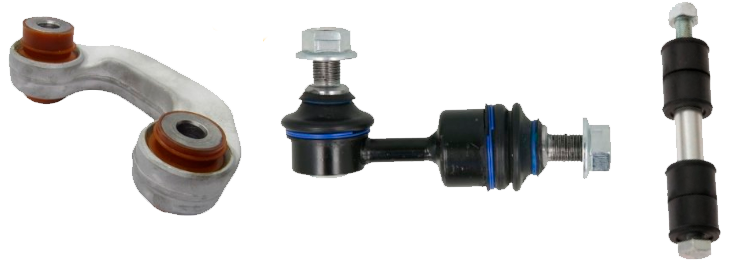
The link attaches using ball joints, bushings, or silent blocks, which act as flexible connections. These elements can be made from rubber or polyurethane, each with its own advantages. Rubber bushings provide a high level of cushioning and reduce noise, while polyurethane versions are known for their durability and resistance to aggressive chemicals and temperature changes. The choice of bushing or silent block material depends on the vehicle's specific use and suspension requirements, striking the right balance between comfort and control.
What Does a Bad Sway Bar Link Sound Like?
One of the most common signs of a failing sway bar link is a distinct knock or squeak that shows up over bumps or in corners. This sound points to wear or damage in components such as the bushings or ball joints. A real-world example: one study conducted by an auto repair shop found that over 60% of cars older than five years have worn sway bar links, leading to worse handling and reduced safety. Replacing worn parts doesn't just get rid of the annoying noise — it also significantly improves the car's lateral stability, giving you a smoother, more controlled ride.
How Often Should You Replace Sway Bar Links?
The service life of sway bar links can vary significantly depending on driving conditions and road quality. It's recommended to inspect the links every 20,000 km (about 12,000 miles) to assess their condition. Faulty links can lead to worse handling and increased tire wear, which can potentially cause a dangerous situation on the road.
Sway bar link replacement is usually needed once you notice signs of wear, such as knocking or squeaking over bumps, or visible damage and deformation. It's important not to ignore these symptoms, since they signal that the components need to be replaced to keep driving safe.
Choosing quality sway bar links is the key to durability and reliability. When buying parts, it's worth favoring trusted manufacturers. Experts recommend not cutting corners on safety by choosing cheaper alternatives, which can fail quickly and lead to extra costs down the road.
How Long Do Sway Bar Links Last?
The lifespan of sway bar links depends on many factors, including driving conditions, road quality, and how intensively the vehicle is used. On average, expected service life ranges from 50,000 to 100,000 km (roughly 30,000-60,000 miles), but these figures can vary significantly. Regular inspection and timely replacement of these components are essential for maximum safety and comfort behind the wheel.
There are several signs that indicate your sway bar links need to be inspected or replaced:
Unusual noises when turning the wheel or driving over bumps.
Worse handling, especially when cornering.
Excessive body roll during maneuvers.
These symptoms can indicate wear or damage to the sway bar links, which calls for prompt attention from a specialist to keep the driver and passengers safe.
What Happens If You Drive With a Broken Sway Bar Link?
Driving with a broken sway bar link can lead to serious consequences for vehicle handling and the safety of the driver and passengers. Worse handling and a higher risk of rollover when cornering at speed are just some of them. On top of that, tire wear speeds up because of uneven load distribution across the wheels, which can lead to unexpected tire failure. Extra strain on the suspension and other chassis components can also cause them to wear out and fail prematurely, ultimately leading to costly repairs. It's important to watch for any signs of a failing sway bar link and have it replaced in time to avoid these problems.
Get a Consultation on Choosing Sway Bar Links or Bushings:
VIBER

TELEGRAM