



What Is a Strut Mount? Function and Lifespan
Sooner or later, every car owner faces the need to service or replace the strut mount — an important suspension component responsible for ride smoothness and comfort. Many drivers wonder: how do you know it's time to replace the mounts, can you keep driving with a faulty one, and what happens if you ignore the problem? In this article, we'll cover the key aspects of strut mounts: their role in the suspension system, service life, signs of wear, and whether you need to replace the strut mount bearings when you update your struts.
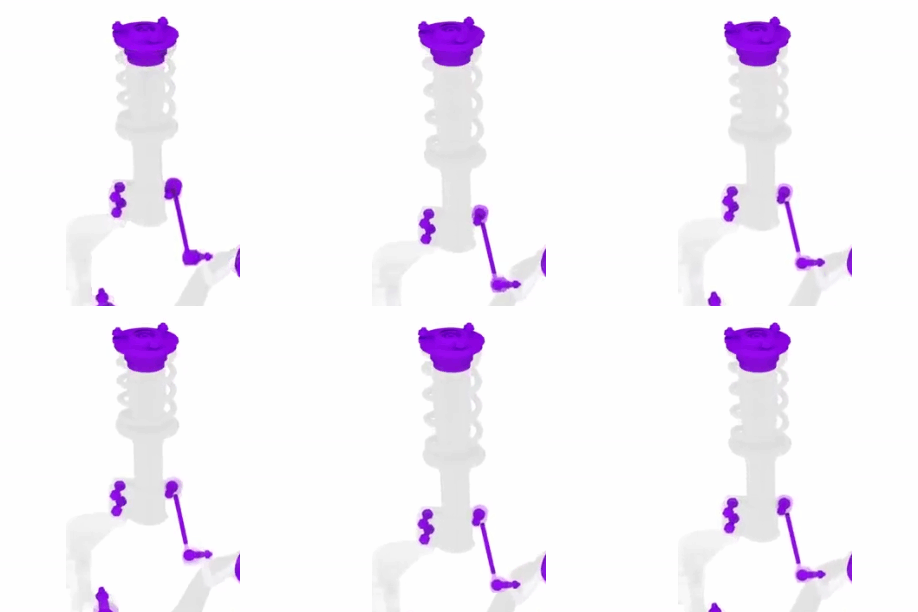
What Does a Strut Mount Do?
A strut mount (also known as a shock mount) serves as the connecting element between the car's body and the strut assembly, allowing the strut to effectively absorb road irregularities. The strut mount provides the connection stiffness needed for precise steering and stable handling on the road.
This shouldn't be confused with a shock absorber bushing, a different suspension part that cushions the lower end of the strut/shock body rather than connecting it to the car's body. For a broader look at how these connecting rubber-and-metal components work across the suspension, see our guide on what is a car bushing.
It's equally important to note that the strut mount affects how loads are distributed across different suspension components. A properly functioning mount helps spread loads evenly, which prevents premature wear of suspension parts and extends their service life — and that, in turn, lowers your overall maintenance costs.
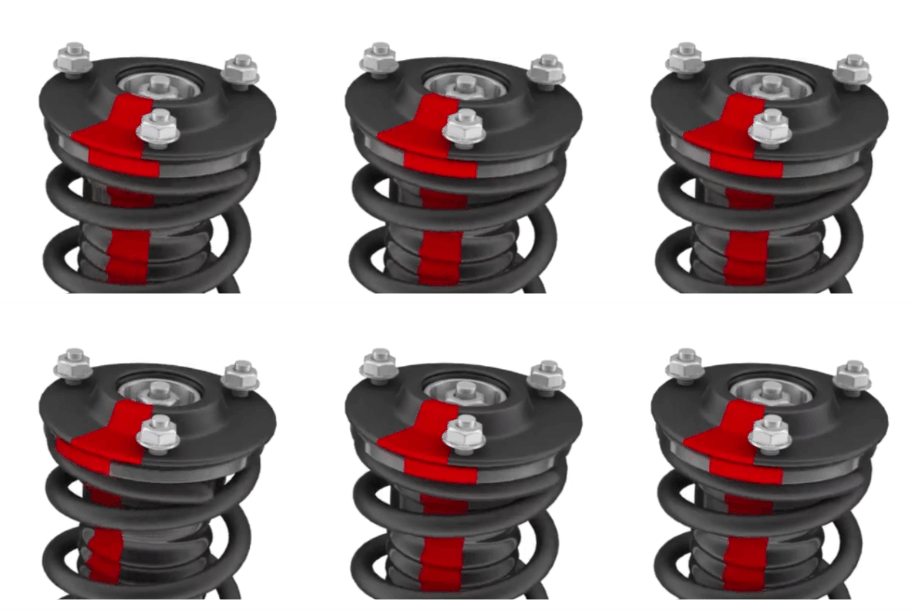
How Long Do Strut Mounts Last?
The service life of a strut mount can vary significantly depending on many factors — driving conditions, road quality, and the type and quality of the mount itself. On average, manufacturers state that strut mounts can last anywhere from 50,000 to 70,000 km (roughly 31,000–43,500 miles).
However, if the car is driven hard in tough conditions — poor roads or frequent temperature swings, for example — that lifespan can shrink considerably. Regular inspection of your strut mounts helps you catch suspension problems before they get worse.
To make this clearer, here's a comparison table of typical strut mount lifespans by car brand. This data will help car owners get a better sense of when to expect a replacement.
Car Brand.... | Average Strut Mount Lifespan (km) |
Toyota | 60,000 - 70,000 |
Volkswagen | 50,000 - 60,000 |
Ford | 55,000 - 65,000 |
Hyundai | 60,000 - 70,000 |
Choosing quality components and staying on top of maintenance is the key to strut mount longevity — and, as a result, to driving comfort and safety.
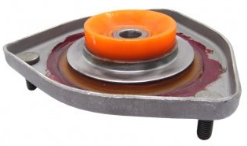
Polyurethane strut mounts have been gaining popularity lately thanks to their improved properties compared to rubber ones. You can find a polyurethane strut mount for your car here — STRUT MOUNTS ON OUR WEBSITE
What Happens If You Don't Replace a Strut Mount?
Ignoring regular strut mount replacement can lead to serious consequences for handling and safety. Faster tire wear, worse handling, longer braking distances, and a higher risk of accidents are just some of them.
That's why timely strut mount replacement doesn't just keep your ride comfortable and safe — it also helps you avoid extra repair costs down the road.
When Should You Replace a Strut Mount?
There are several signs that point to a worn strut mount. It's worth paying close attention to your car's condition to avoid more serious breakdowns later. The key things to watch for include: unusual noise while driving, worse handling, excessive body roll, and longer braking distances. These symptoms can indicate a worn strut mount that needs replacing.
Strut mounts are usually replaced during scheduled maintenance, but certain situations call for it sooner — after an accident, for example, or if the car is driven hard on rough roads. In these cases, the strut mount wears out much faster, and putting off replacement can damage other suspension components.
When choosing a new strut mount, price shouldn't be the only factor — quality matters just as much. Stick with trusted manufacturers that back their products with a warranty. That way, you avoid having to replace the part again soon and keep your suspension working reliably. Remember, cutting corners on parts quality can end up costing you more down the line.
Can You Drive With a Broken Strut Mount?
Driving with a damaged strut mount can seriously affect your car's handling and safety. Experts strongly advise against ignoring this problem, since the strut mount affects how the whole suspension performs — and, by extension, the car's overall stability on the road. A damaged mount can cause faster tire wear, worse handling, and even loss of control in critical situations.
Signs of a bad strut mount include unusual noise while driving — especially over bumps — and changes in wheel alignment angles, which directly affect handling. A professional inspection at an auto shop will pinpoint exactly how worn the mount is and whether it needs replacing. Don't put off that visit: a problem left undetected and unresolved now can mean a much more expensive repair later.
Replacing a strut mount is a job for an experienced mechanic, since it calls for specific knowledge and tools. Using quality parts ensures the repair lasts and keeps you safe on the road. Don't cut corners on safety by choosing low-quality components — it will only lead to new problems down the line.
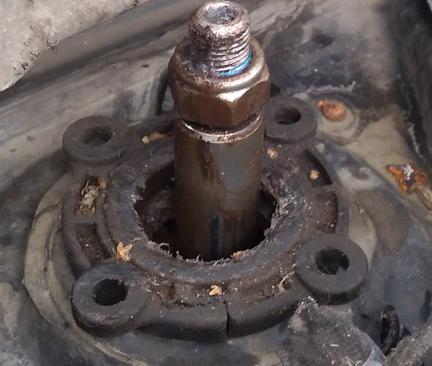
What Happens If a Strut Mount Breaks?
Damage or a full break in the strut mount can have serious consequences for your car's handling and safety. Worse handling and a higher risk of accidents are just the tip of the iceberg. Drivers should understand that this can also cause the following problems:
Faster tire wear — misaligned wheels lead to uneven tread wear.
Higher fuel consumption — an unstable car forces more aggressive driving inputs, which burns more fuel.
Suspension damage — loads that should be absorbed by the shock absorber get transferred to other suspension components, speeding up their wear.
Beyond these immediate effects, it's also worth considering the long-term impact of a damaged strut mount. Over time, the problems it causes can lead to costly repairs — not just to the suspension, but to other systems as well, including the steering system, body components, and even the engine, if vibrations and shock loads keep being transmitted without proper cushioning.
If you notice signs of damage to your strut mount, it's best to get to a service center for diagnosis and repair right away. Preventive checks and timely replacement of worn suspension parts can significantly lower the risk of sudden failure. In short, regular inspection and maintenance are key to keeping your car safe and reliable.
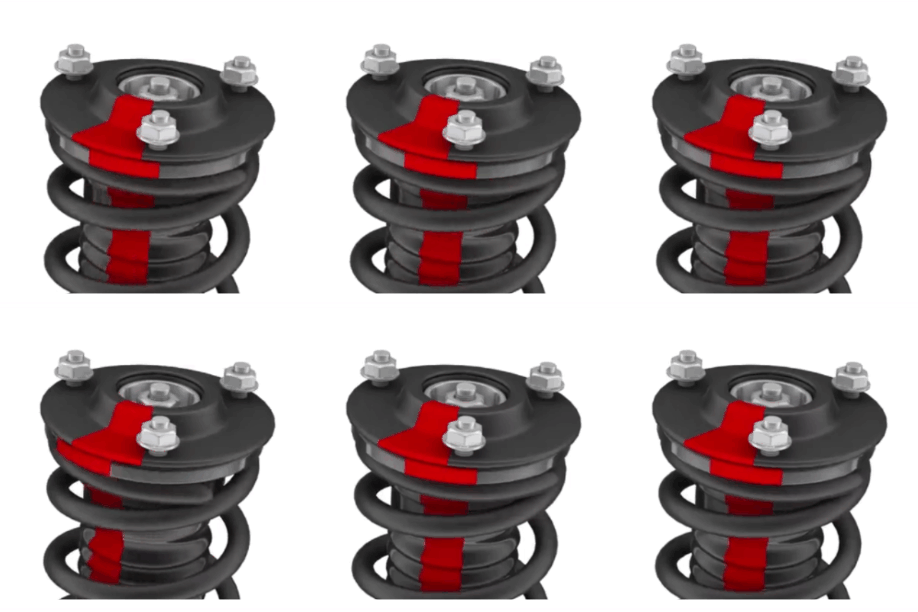
Do You Need to Replace Strut Mount Bearings When Replacing Struts?
When replacing your struts, the question of whether to replace the strut mount bearings often comes up. Experts recommend replacing these components at the same time as the shock absorbers, since worn bearings can reduce the effectiveness of new struts and cause them to fail sooner.
Uncertainty about the bearings' condition can lead to unpredictable handling, which raises the risk of an accident. That's why, even without obvious signs of wear, replacing the strut mount bearings alongside the struts is recommended for maximum safety and driving comfort. And while you're at it, it's worth checking other wear-prone suspension parts too — for example, spring spacers, if your car is fitted with them.
Get a Consultation on Choosing the Right Part:
VIBER

TELEGRAM