



Shock Absorber Bushings: Purpose and Selection
Let's take a look at the role shock absorber bushings play in a car's suspension system, how their wear affects handling and safety, and how to spot the signs of a failing bushing in time. If you're new to the topic, our overview of what a car bushing is covers the basics first. Our goal is to give you all the information you need to keep your car in top condition, ensuring the highest level of safety and comfort on the road.
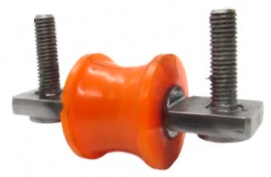
Where Are Shock Absorber Bushings Located?
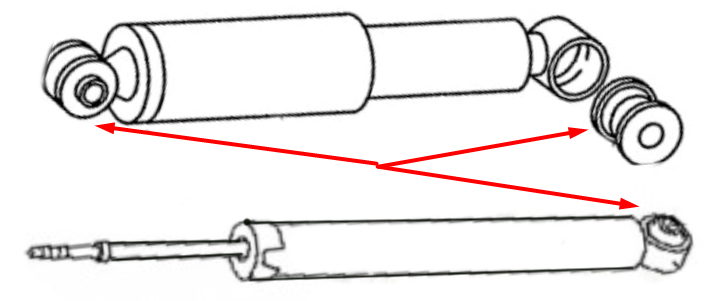
Shock absorber bushings connect the shock absorbers to the car's body and suspension, absorbing vibrations and impacts from road irregularities. On most cars, bushings are installed at the top and bottom of the shock absorber, effectively damping vibrations and extending the shock absorber's own service life. Below is a table with examples of bushing placement on shock absorbers of various car makes.
Car Make........ | Bushing Location |
Toyota Camry | Top and bottom of the shock absorber |
Volkswagen Passat | Top of the shock absorber only |
Ford Focus | Top and bottom of the shock absorber |
Hyundai Sonata | Bottom of the shock absorber only |
As the table shows, bushing placement can vary depending on the suspension design and the carmaker's own preferences. Keep in mind that the shock absorber bushing is a different part from the shock absorber mount at the very top of the strut tower — that's a separate component with its own dedicated article.
What Do Shock Absorber Bushings Affect?
Shock absorber bushings are responsible for absorbing and damping the vibrations that occur while the car is in motion. Properly functioning bushings significantly reduce the load on the suspension and the car's body, thereby extending their service life.
The importance of shock absorber bushings also lies in how they affect the car's handling. They provide the necessary rigidity in the connection between the suspension and the body, allowing the car to respond to driver input more precisely and predictably. Key benefits of using quality shock absorber bushings include:
Improved handling and stability on the road.
Reduced wear on suspension and body components through effective vibration damping.
Increased driving comfort by minimizing the transfer of vibrations from the road into the cabin.
Replacing worn shock absorber bushings is an important maintenance procedure that should be carried out according to the car manufacturer's recommendations. Ignoring worn bushings can lead to poorer handling, higher fuel consumption, and, as a result, an increased risk of road accidents. That's why timely diagnosis and shock absorber bushing replacement are key to safety and driving comfort.
What Are the Benefits of Shock Absorber Bushings?
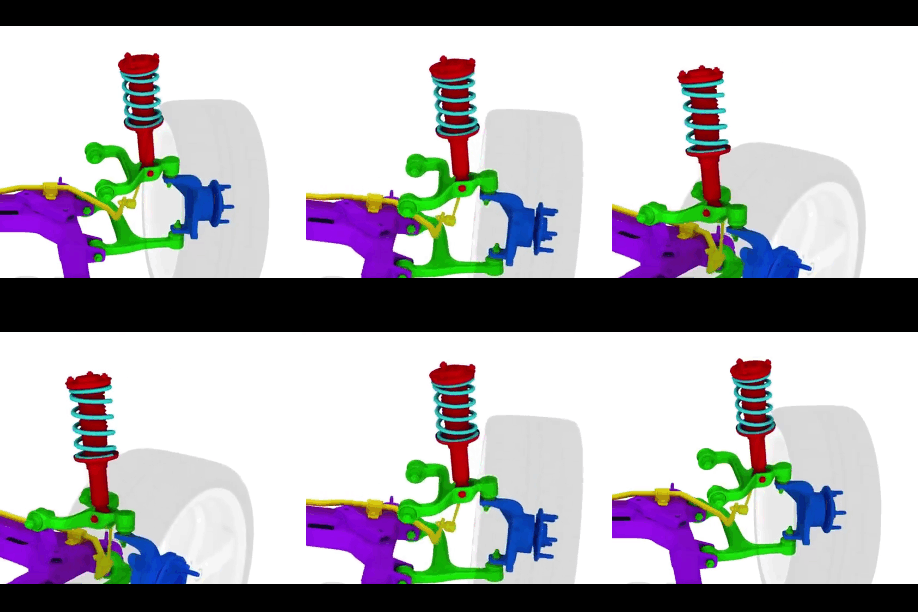
Using quality shock absorber bushings improves the car's handling and road stability, which matters most at high speeds or in difficult road conditions. Properly matched, timely-replaced bushings can also significantly extend the service life of the shock absorbers and the suspension as a whole. So even though they're easy to overlook, shock absorber bushings play a key role in driving safety and comfort — which is why it's important not to neglect their timely diagnosis and replacement.
How to Choose the Right Shock Absorber Bushing
Different shock absorber manufacturers produce units with mounting holes sized for different bushings. This comes down to optimizing damping characteristics for specific operating conditions and car models. For example, larger bushings may be intended for heavy-duty use or vehicles with a high suspension load, while smaller ones suit passenger cars used mainly in the city.
Because of this, when replacing the shock absorber bushings on a car, it's important to know exactly which shock absorber make is installed — especially if it was already replaced with a non-original part. A difference in mounting-hole size may call for a different bushing to be selected, which is critical for safety and comfort while driving. Knowing the correct shock absorber make also helps you avoid mistakes when choosing parts, ensuring the suspension keeps working correctly and lasts as long as it should. Bushings aren't the only suspension part that needs matching to your car this way — our guide to coil spring spacers walks through the same kind of fit considerations for another common suspension part.
FIND SHOCK ABSORBER BUSHINGS ON OUR WEBSITE
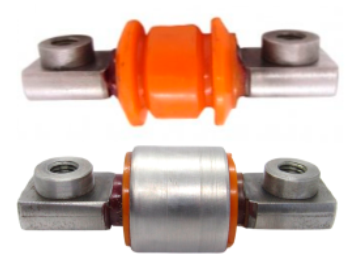
How to Tell If Your Shock Absorber Bushings Are Worn?
You can identify a worn shock absorber bushing by a number of characteristic signs. Increased noise and vibration while driving, especially over bumps, is the first signal to check further. It's also worth paying attention to changes in handling: reduced stability at high speed and through corners. Uneven tire wear can point to suspension geometry thrown off by failed bushings. For an accurate diagnosis, it's best to see a specialist who can perform a visual and instrumental inspection.
Symptom........ | Normal Condition........ | If Bushings Fail |
Noise and vibration.... | Minimal | Increased |
Handling | Stable | Reduced |
Tire wear | Even | Uneven |
Get a Consultation on Choosing Parts:
VIBER

TELEGRAM